Mindset vs. Skillset: Both Matter. Mindset comes first.
Why do some leaders grow from every intercultural experience while others seem to stay stuck?
The answer is not usually intelligence, experience, or even training.
More often, it comes down to mindset.
Many people and organizations invest heavily in developing intercultural skills. And those skills matter.
Skills help us listen more effectively, navigate conflict, facilitate inclusive meetings, adapt our communication, and build stronger relationships across difference.
But skills alone are not enough.
Because when we encounter a perspective, value, communication style, or lived experience that differs from our own, our mindset often determines what happens next.
Do we become defensive or curious?
Do we assume or inquire?
Do we seek validation or understanding?
Do we protect our perspective or remain open to learning?
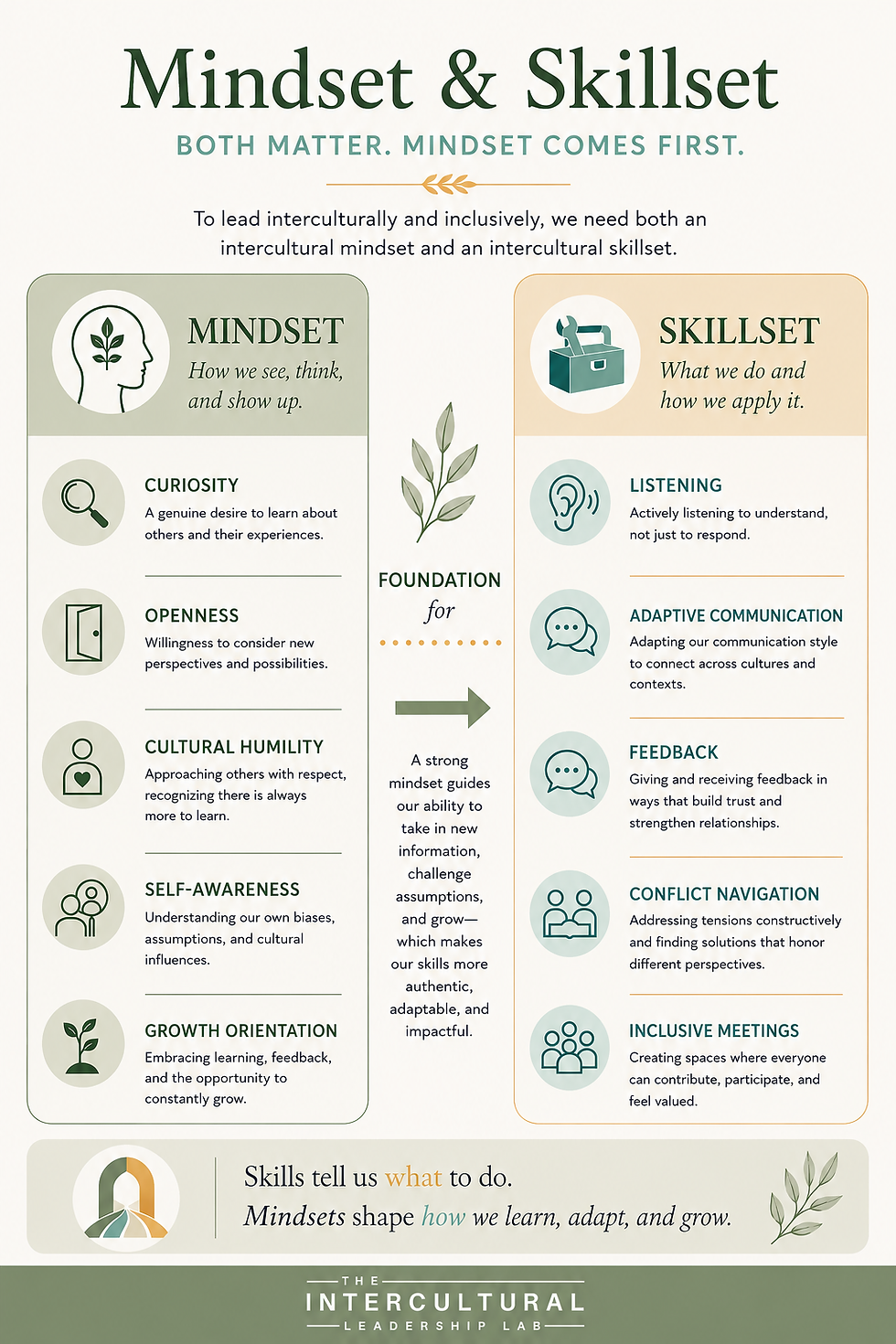
A skillset is what we do.
A mindset is how we see.
An intercultural mindset creates the conditions for growth. It shapes our ability to take in new information, challenge assumptions, learn from unfamiliar experiences, and engage difference with humility rather than certainty.
Developing an intercultural mindset often begins with practices such as:
Cultivating curiosity about people whose experiences differ from our own
Becoming aware of unconscious biases and assumptions
Practicing openness to perspectives that challenge our thinking
Developing cultural humility rather than striving for cultural certainty
Embracing a growth orientation that sees feedback, learning, and discomfort as opportunities for development
When leaders cultivate this mindset, intercultural skills become more authentic, more adaptive, and more impactful. Because inclusive and intercultural leadership is not simply about learning a new set of tools.
It is about learning to see differently.


Comments