Curiosity is a Leadership Discipline
Curiosity is one of the most necessary mindsets of a leader and a team.
Yet, as humans, curiosity is not usually our automatic response when we encounter others who behave, communicate, or experience the world differently than we do.
Instead, our natural response may be to judge, interpret narrowly, or distance ourselves from what feels unfamiliar. That is why curiosity has to be intentionally cultivated as a leadership capacity.
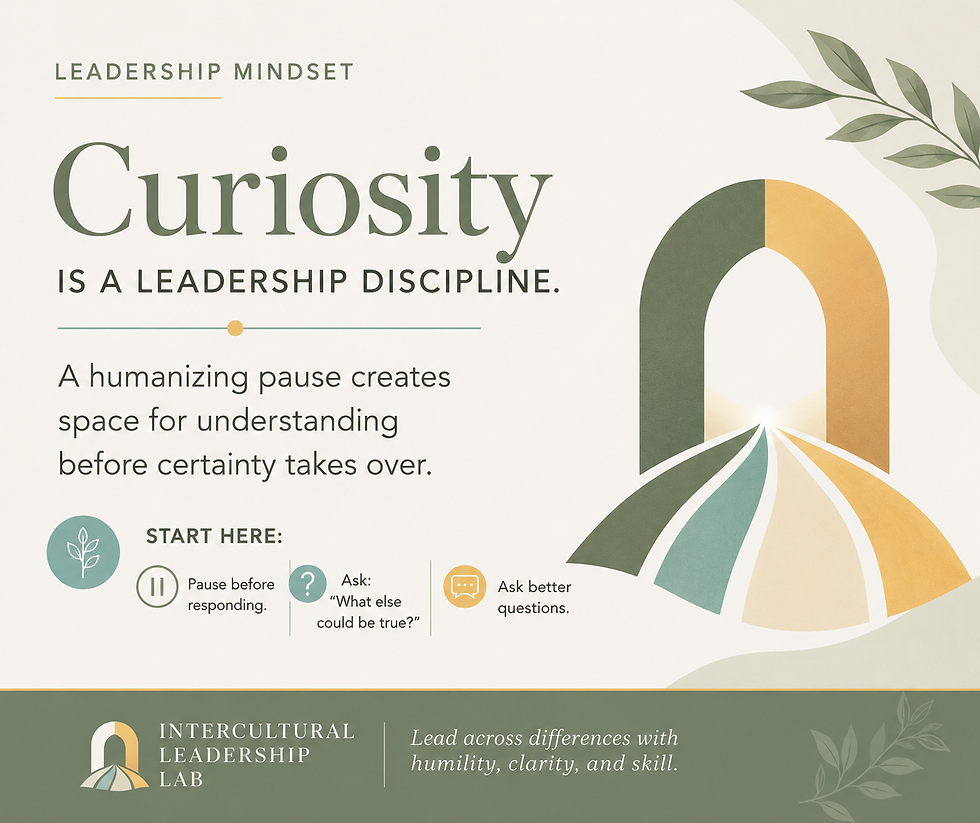
One way we cultivate curiosity is through what I call a "humanizing pause".
In that pause, we make room to see the person, not just the moment we are reacting to. We remember there is a person in front of us with a story, context, culture, values, pressures, and lived experience we may not fully understand. That pause does not mean we ignore differences or avoid accountability. It simply creates enough space for understanding before we make our leadership choices.
So how do we cultivate curiosity?
Start here:
When encountering differences, pause before responding.
Think: “What else could be true?” or "What might these differences indicate?"
Ask better questions that help flesh out those differences.
Try: “Can you help me understand how you’re seeing this?”
Listen for context, not just content.
Pay attention to the experiences, values, pressures, and assumptions that may be shaping the interaction.
Curiosity builds trust. It reduces misunderstanding. And it creates the conditions where people feel seen, heard, and able to contribute more fully.
Reflection question: Where might you practice a "humanizing pause" today?


Comments