Cultural Humility: A key mindset for effective leadership across differences
Cultural humility is increasingly recognized as an essential mindset for leading across difference.
But what is it, and why is it important?
The term was introduced in 1998 by physicians Melanie Tervalon and Jann Murray-García, who were questioning how medical professionals were being prepared to work across cultures.
At the time, much of the conversation in medical education focused on "cultural competence": developing the knowledge and skills needed to work effectively with people from cultural backgrounds different from our own.
That knowledge matters.
Learning about the cultural values, histories, communication patterns, and lived experiences of others can help us engage difference with greater awareness.
But Tervalon and Murray-García raised an important concern:
Can we ever become fully “competent” in another person’s culture or lived experience?
This concern led them to shift the goal from achieving "cultural" mastery to practicing ongoing reflection, accountability, and partnership across differences.
They proposed a new term of "cultural humility" as a lifelong practice involving:
ongoing self-evaluation and self-critique
attention to power imbalances
mutually respectful partnerships with individuals and communities
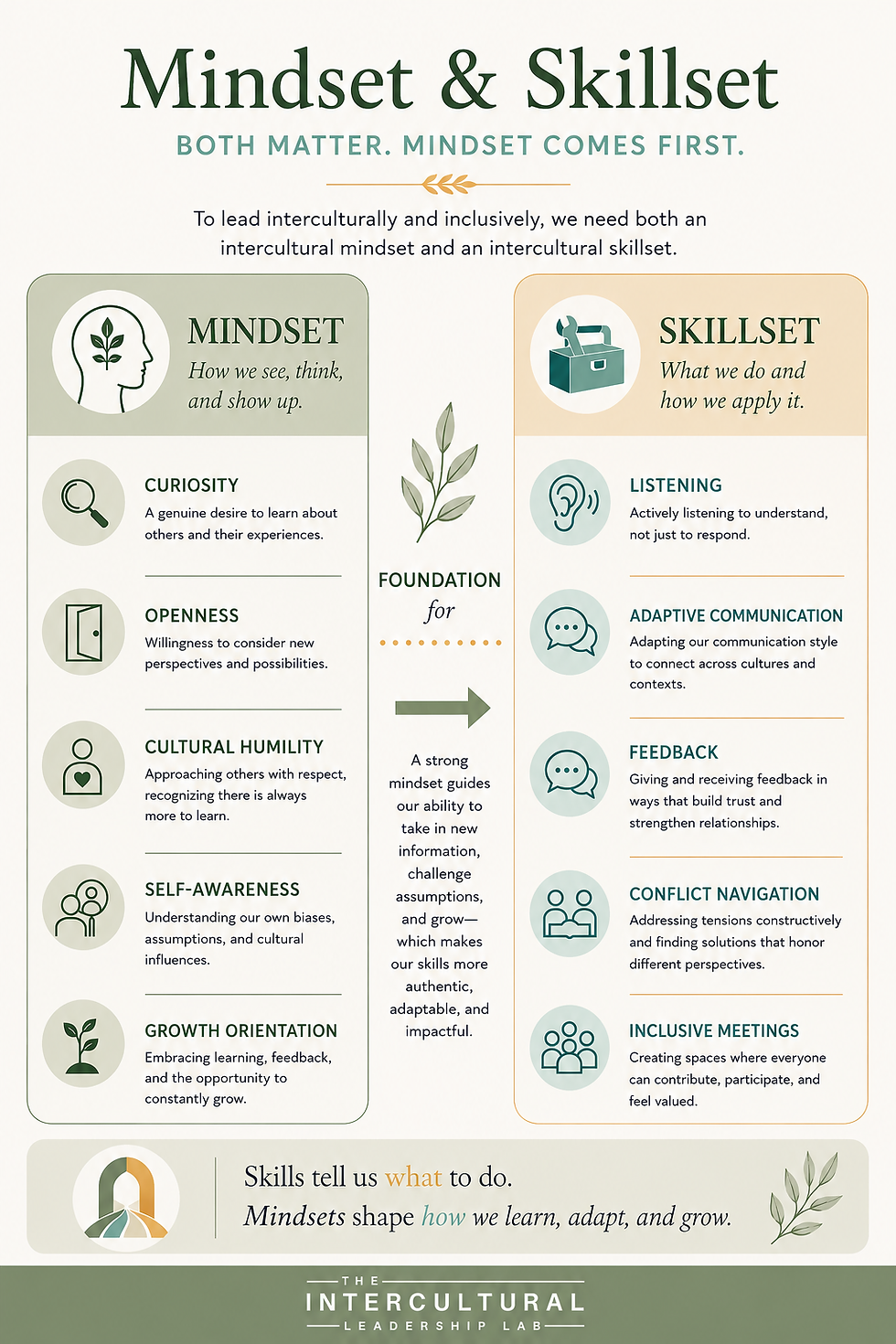
Thus, in leadership, we might define cultural humility as the ongoing practice of examining our assumptions, recognizing the limits of our knowledge, attending to power, and remaining willing to learn from the people and communities we engage.
So, how can we cultivate cultural humility as leaders?
1. Examine the assumptions you bring.
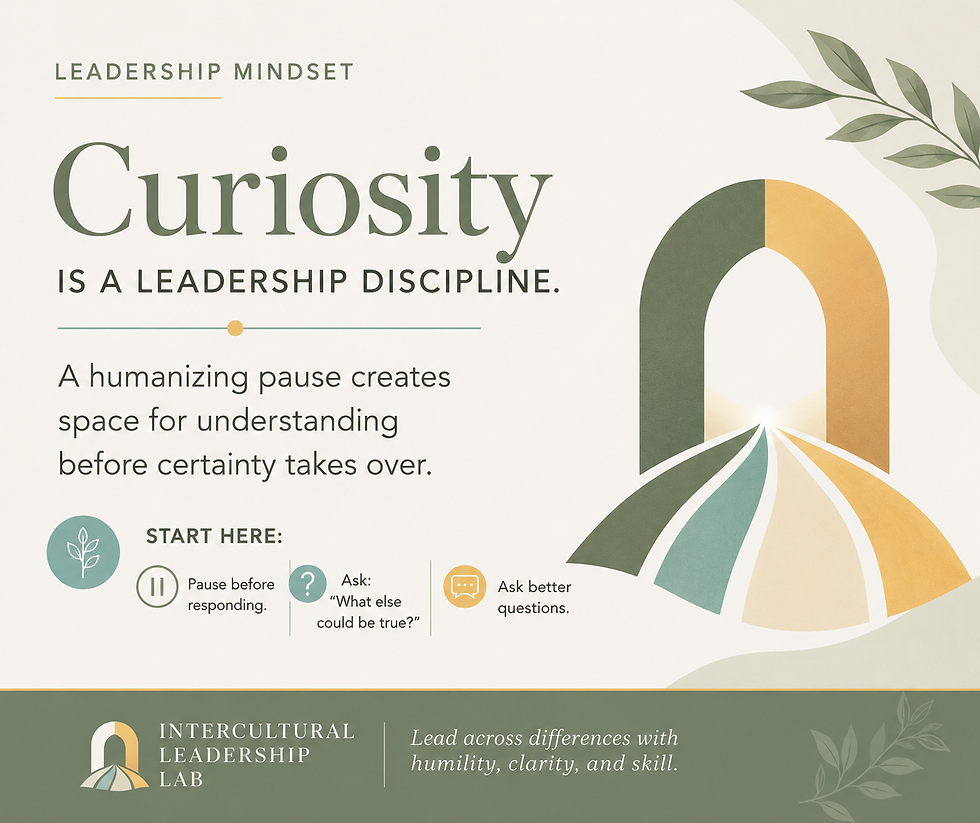
Before interpreting someone’s behavior, pause and ask:
What am I assuming?
What experiences or cultural expectations may be shaping my interpretation?
What else could be true?
Cultural humility begins with recognizing that we never enter an interaction without a lens.
2. Ask rather than assume.
Learning about cultural patterns can provide helpful context, but it should never replace learning directly from the person in front of us. Ask thoughtful questions. Listen for how people describe their own experiences, needs, and perspectives.
3. Recognize the limits of your knowledge.
We can be informed without assuming expertise in another person’s lived experience.
Practice saying:
“I may be missing something.”
“Help me understand how you see this.”
“What would be important for me to know?”

4. Pay attention to power.
Consider how your role, authority, identity, or access to information may shape the interaction.
Who feels able to speak honestly?
Whose perspective is being treated as most credible?
Who is expected to adapt?
Whose voice may be missing from the conversation?
5. Seek feedback about your impact.
Good intentions do not always create the impact we hoped for. Invite honest feedback, especially from people whose experiences or perspectives differ from your own. When feedback is offered, resist the urge to explain your intentions before understanding the impact.
6. Let what you learn change how you lead.
Cultural humility is not demonstrated only through reflection or listening.
It becomes visible when we adjust our communication, reconsider a decision, share influence, repair harm, or change a practice that is creating barriers for others.
Bottom line: Cultural humility is not a destination we arrive at.
It is an ongoing leadership discipline: a commitment to keep learning, examine how power is operating, and remain accountable for how we engage and lead across difference.

Comments